 Day 12: Wednesday, July 8
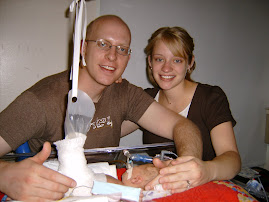
Today was the next big day that we were waiting for. We got to hold our baby boy for the very first time. Though already 12 days old, he hasn't grown a whole lot from his initial 5 lbs, so he is still as small and precious as could be. As we held him and talked to him he even opened his eyes a little bit. He is still on a lot of medication for pain, so it seemed to be everything he could do to respond to our talking and take a peak at mom and dad. In addition to holding him we also got to do "cares" which includes taking his temperature, changing his diaper, switching his foot pulse monitor, and using a sucker-looking swab to clean the saliva and bubbles from his mouth that collect due to his Anderson tube. It felt so good to finally be involved first hand in his care. I am finally starting to feel like a mom.
Needless to say, this was a very happy day.
 When the nurse practitioner came by, I asked her what we were looking for in order to start feedings. She said that two things need to happen. We need to know that his intestines are awake and working, so they will be listening for any bowel sounds and waiting for a bowel movement or gas. In addition to this, they need to see that things aren't still backing up into his stomach. This is indicated by the fluids from his Anderson tube coming out clear and in less volume. She surprised me when she told us that since he wasn't terribly premature, that he would start feedings on the bottle and just skip over the feeding tube. This made me so happy; just one more thing that we can be involved in!
 He is continuing to make great progress. They are planning to wean him from his oxygen levels and eventually switch to a cannula that does not force oxygen, but is just there for him to breathe in. They also decided to pace out his morphine to every 4 hours.





No comments:
Post a Comment